Furniture Design
Elara
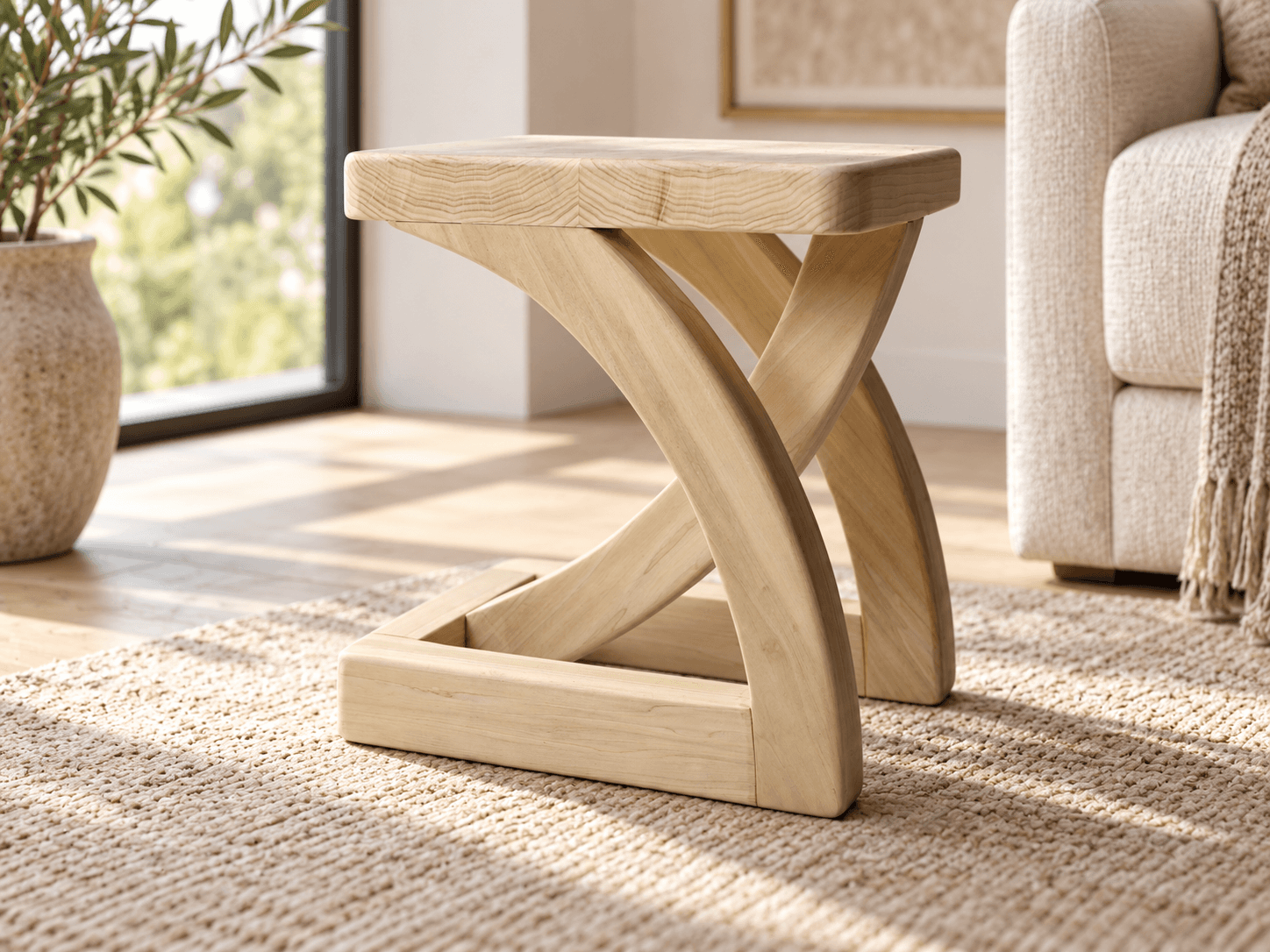
A fluid line, made into a physical object.
PROJECT OVERVIEW
Elara is a sculptural stool exploring the relationship between fluid form, structural stability, and craftsmanship. Through iterative form development and physical fabrication, the project balances a lightweight visual presence with the functional demands of everyday seating.
Deliverables:
Furniture Design
Form Development
Fabrication
CAD
Joinery
Prototyping
Year
/
Spring 2025
Client
/
Georgia Tech — Industrial Design
01 / FORM INTENT
Fluid form. Grounded structure.

Elara began as an exploration of continuous, flowing geometry. The goal was to create a stool that felt visually light and sculptural while still communicating enough stability to feel usable.

Early sketches explored how far the legs and seat could visually flow into one another before the stool began to lose structural clarity.
02 / Form Development
Reducing the form without losing the gesture.
Structural As the concept developed, I refined the curvature, leg spacing, and seat proportions to preserve the original fluid gesture while creating a more balanced and manufacturable structure. and joinery connect the drawing to a physical object.

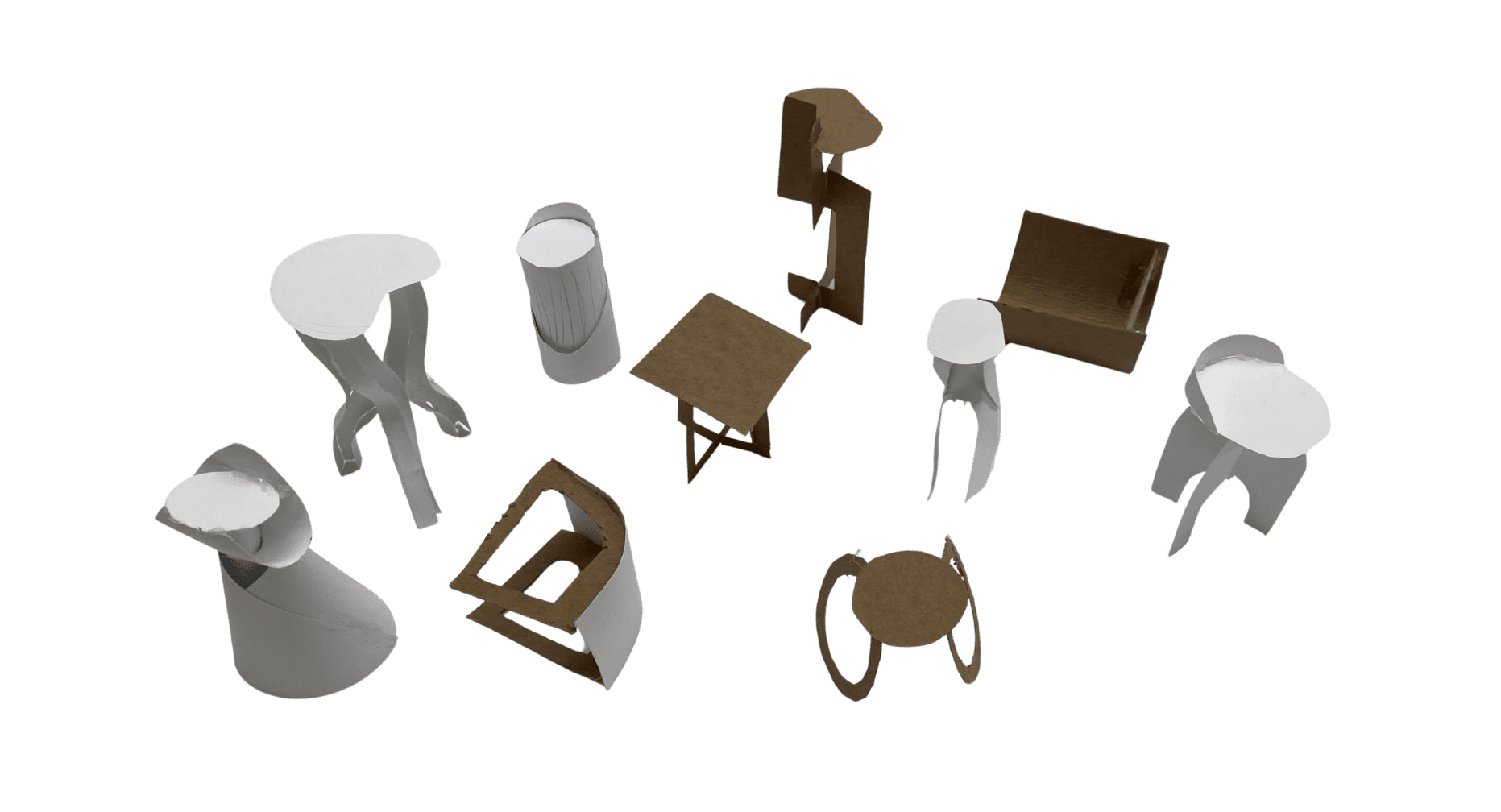
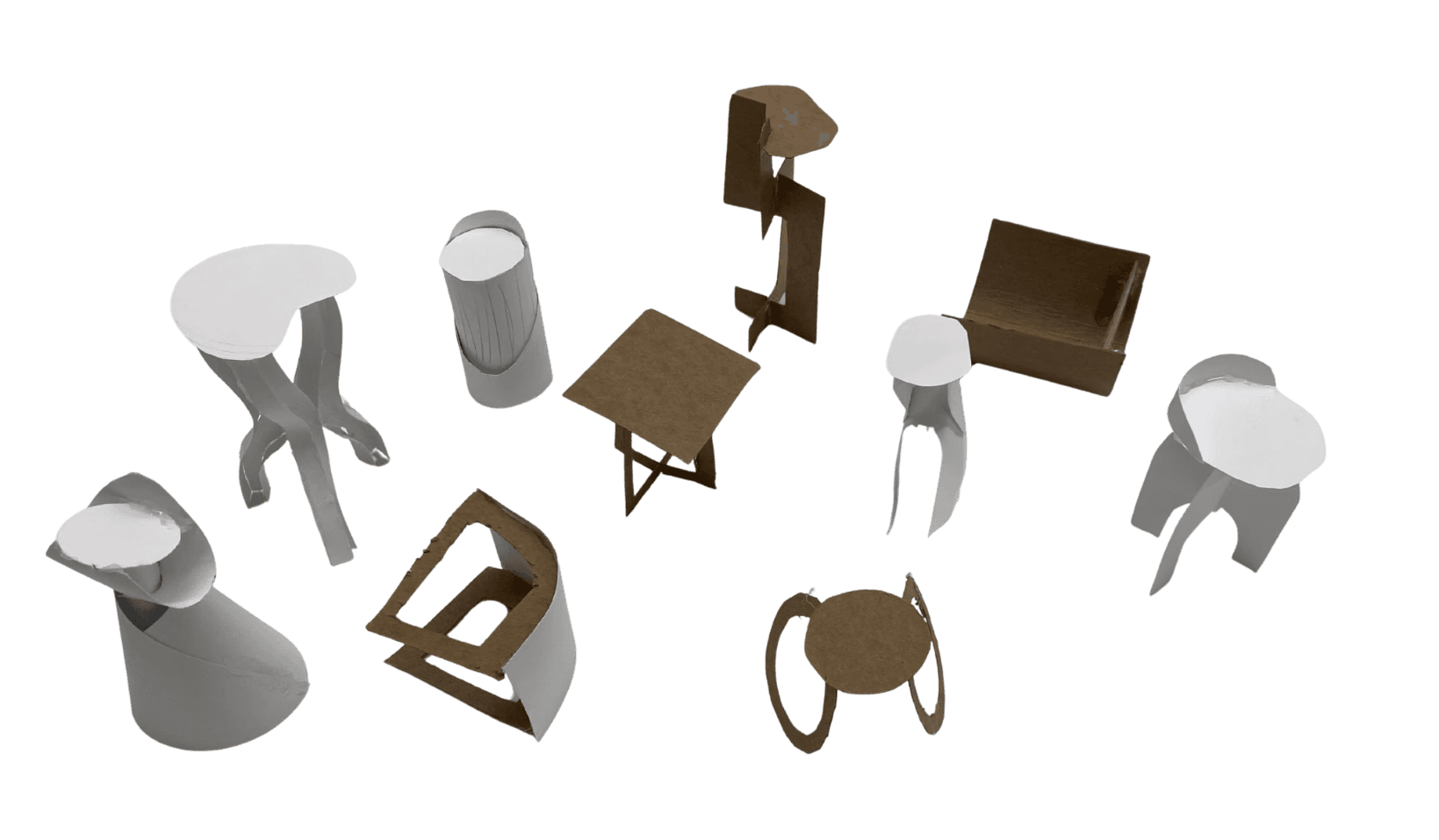
As the concept developed, I refined the curvature, leg spacing, and seat proportions to preserve the original fluid gesture while creating a more balanced and manufacturable structure.
Seat profile — refined to feel thinner without appearing fragile
Leg spacing — widened to improve visual and physical stability
Curvature — simplified so the silhouette remained fluid but easier to fabricate
02 / JOINERY + FABRICATION
The form has to hold.
Translating the sculptural form into wood required the joints to carry structural load without interrupting the continuous silhouette.
Domino joinery allowed the major components to connect cleanly while keeping hardware out of sight. Fabrication became a process of balancing structural reliability with the visual lightness established in the sketches.


Physical fabrication revealed subtle changes that were difficult to judge in CAD alone. Edge transitions, surface continuity, and the relationship between the seat and legs were refined by hand as the stool came together.
03 / FINAL OBJECT
Made to be seen. Made to be used.

The final stool preserves the continuous gesture of the original sketches while using proportion, joinery, and material to create a stable everyday object.
04/ Reflection
Good form still has to work.
Elara taught me that sculptural intent becomes more meaningful when it survives the realities of material, joinery, and fabrication. The strongest decisions were the ones that preserved the original gesture while making the stool structurally believable and physically buildable.
Form Development · Furniture Design · Fabrication · Joinery · Craftsmanship · Prototyping
Next work